Monday, June 22, 2009

Eyebrow Literature


On Friday, my older brother forwarded me a Twitter campaign asking people to visit the Daily Mail's website and take part in the following poll:

Should the NHS allow gipsies (sic!) to jump the queue?

The poll was successfully hijacked. 93% voted in favour of prioritised healthcare for gypsies and it was removed from the website. The Daily Mail, presumably very embarrassed, hastily replaced it with a poll asking whether Commons speaker Michael Martin should resign ("He resigned four weeks ago," notes the Christian think-tank Ekklesia). This impressive -and extremely funny- piece of media sabotage was an interesting example of how new social networking devices can be successfully used to political ends. And it's a nice retort to my last post about British apathy.

Now, criticising the Daily Mail for being offensive is a bit like criticising a dog for barking. It may be annoying as hell, but it would be exhausting to get angry every time it happened. And the author of the column that triggered the poll, Richard Littlejohn, seems to be a living parody of the worst bits of the Mail's output. A quick bit of research has revealed that he is notorious for his hatred of gypsies, muslims, Palistinians, asylum seekers, gay people and liberals. All of this hating clearly doesn't leave the poor guy much time for thinking.

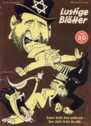
That's not really what I want to talk about. Dismantling Littlejohn's poorly-written, tasteless column line-by-line would be rather like shooting the proverbial fish in the barrel. But something else attracted my attention about the rant, namely the cartoon (above) that accompanied it on the page. I showed it to a friend at the weekend and told her it was from the Daily Mail. She asked what year, and to her amazement I told her it was printed last week.

"I thought it was from the 1930s!" she exclaimed.

This is exactly the point. Because, in spite of Littlejohn's claims that the gypsies are not an ethnic group at all and are therefore not entitled to any governmental safeguards, this picture looks suspiciously like a Nazi-era racist caricature. Note, for example, the father figure pulling the horse into the hospital waiting room. He possesses a fine monobrow, as does the child to his right being dragged into the frame. As a monobrow wearer myself, this makes him an instantly handsome and admirable fellow in my book. We all know, after all, that monobrows are the Rolls Royce of the eyebrow world. To the cartoonist, however, this is simply negative ethnic shorthand.

Then there is the implied violence in the cartoon. The British tax-payer figure is being trampled into the ground by the grotesquely-drawn gypsy stampede. This may be figuratively intended, but it's extremely irresponsible and adds an element of physical threat to the fictional scenario (NHS research shows that gypsy communities' approaches to healthcare makes them very reluctant to seek medical treatment). It's the classic Joseph Goebbels logic: if you want to take people to war, tell them they're being attacked.

The Economist recently wrote with regard to Silvio Berlusconi's anti-immigration rhetoric in Italy: "The danger is that many a racist thug may now think he has tacit support from the prime minister."

How long until a racist thug in Britain feels he has tacit support from the British press in getting his own back on gypsies? Since its inception, the Daily Mail has been nurturing a climate of intolerance towards minorities. The disturbing thing when its cartoonists follow suit is that the historical precedents for the demonisation of ethnic groups become even more evident.


Now, however, we have new weapons to fight against the old methods. The reactionary media may still be taking people to war but, with the increasing shift towards interactive digital media, the battle lines are being redrawn. Social networking sites, as we saw with last week's successful Twitter campaign, provide us with the opportunity to mobilise large numbers of people in a short space of time and make a statement through direct action.

"Don't die in the waiting room of the future", says an old East German punk slogan. I couldn't agree more. Let's jump the queue instead...

Tuesday, June 16, 2009

Resistance is Fertile

Berlin is a morbid kind of town. You never quite know whose grave you're walking on. Bronze plaques in the paving stones outside houses tell you the names of murdered Jews who once lived there. And cycling into West Berlin today I realised I was extremely close to the area where 16 dissidents, including the academic Albrecht Haushofer, were shot in the night of 23rd April, 1945. No signs or plaques, just a shudder down your spine as you pass on through.

Haushofer is one of the poets featured in Charles W. Hoffmann's Opposition Poetry in Nazi Germany, a study of writers who attacked the Third Reich from within. 23 pages alone are dedicated to his Moabit Sonnets, a collection of verse he scribbled as he waited for the inevitable in his prison cell. Like putting names to faces, when you've read somebody's innermost thoughts, dreams, fears and reflections, the 64 years just melt away and you find yourself meeting them on every street corner. The ghosts of Berlin have felt even more present than usual lately.

I feel more than just a little bit pathetic, then, in the wake of the neo-fascist British National Party's successes in the European parliamentary elections this month. The BNP received fewer votes than they did in 2004, and yet won 2 seats in Brussels because mainstream voters stayed at home. There's been a lot of talk about apathy towards Europe and disillusionment with the major parties. But whatever the cause, the result is a nightmare come true.

Friedrich Schiller's theory of mankind's inner conflict offers an interesting explanation for the original advent of Nazism, and the resistance poet Rudolf Hagelstange elaborated on the idea in his own work. On the one hand we have our material impulses, and on the other we have morality and reason. Basically, it is the immediate versus the eternal. Today versus forever. We really need to keep a grasp of both, since if we had no material impulses at all we would be unable to feed or dress ourselves in the first place.

The Third Reich, according to the Hagelstange, came into being because this delicate balance was screwed up and we lost a sense of the universal, lasting values. Germany ignored spiritual matters for too long and allowed absolute Evil into the world in the form of Hitler and Nazism, the ultimate expression of short-sighted, destructive human vanity. The result was hell on earth and the systematic murder of millions.

Perhaps surprisingly for someone who clearly spent so much time and energy reading and analysing the stuff, Charles W. Hoffmann argues that most opposition poetry is of little or no artistic value whatsoever. It will not last as poetry per se, and will be of purely documentary interest for future generations. What counted more for Germany at the time, however, was the moral fibre of the men and women who risked (and often lost) their lives by attacking the Nazis in words or deeds. To put it another way, in the midst of the bloodshed and the chaos, creating high art was not a top priority. What was important for Christians and Marxists alike was the content rather than the delivery.

The poets, especially those in prisons and concentration camps who were effectively writing for themselves as they awaited probable death, realised that the most important thing was to transcend the idea of self. Worrying about your own life is an animal instinct, and these brute instincts had driven Germany crazy. What really mattered now was to go on the record as having resisted, no matter what the consequences.

"Even if we die," wrote Harro Schulze-Boysen from Berlin-Plötzensee prison, where he was murdered in 1942, "we know: the seed will grow."

Günther Weisenborn, a member of the Soviet espionage ring known as the Red Orchestra, used the same motif in a poem written whilst in incarceration:

The wind travels through the wheatfield
I lie under a tent of stars
And soon I will lie under the wheat

I'm still looking up, smiling
The whole thing doesn't stop with anyone
The dead have plenty of seed
For your world to inherit

"This is not good poetry," announces Charles W. Hoffmann with characteristic bluntness. He accepts, however, that the basic idea is a fine one. The whole thing ("das alles") implies something more important than any one life. For the communist Weisenborn this may have been the collective - the future socialist utopia. For the Catholic and Protestant poets it was God. But, as our own Shakespeare once asked, what's in a name?

Dietrich Bonhoeffer summed up the poets' sacrifices perfectly when somebody asked him why, as a Protestant pastor, he supported the plots to assassinate Hitler. "When a madman is behind the wheel of a car, and driving down the street," he replied, "as a pastor who is present I can't just console or bury those who get run over. I have to jump in between and stop him."

And now Britain in 2009 is experiencing its own version of the Schillerian imbalance. Instead of doing everything within our power to prevent the Nazis from winning seats, we focussed on temporary personal afflictions such as apathy and disillusionment and let them sneak in the back door. Even if it means voting tactically for a mainstream party we don't necessarily support, it is our duty as human beings to ensure that a political group which openly endorses the crimes of the Third Reich remains a lunatic fringe element and nothing more. A pretty straightforward challenge sent to us by God, or Karl Marx, or whoever you want, and we failed it with flying colours.

The opposition poets in Germany also wrote about the idea of collective guilt, that Hitler was something 'we' (as opposed to 'they') had allowed to happen, and everybody had something to answer for in the tragedy. This approach is as valid today as it ever was. On Sunday 7th June 2009, Britain, we, blew it. I didn't even bother to see if I could vote from abroad. I just crossed my fingers, went to bed and checked the BBC website the morning after to find out that we are now represented in Europe by two holocaust deniers.

In this city of ghosts, we are reminded on a daily basis of what happens when you let a madman behind the wheel. We've got two of them driving to Brussels now, and it's our fault.

Tuesday, May 5, 2009

Save Berlin?

I was interested to see that the Exberliner, Berlin's English-language magazine, is going to hold a Save Berlin exhibition in November to coincide with the 20th anniversary of the fall of the Berlin wall. Their manifesto is simple:

Mega-malls, fake Prussian palaces and luxury lofts are threatening to turn the city into a sterile global capital. Don’t let grey bureaucrats and investors lacking imagination shape our future. DO SOMETHING!

But as frustrating as this is, it is also both logical and inevitable. The historian Timothy Garton Ash put it beautifully when talking about the commercialisation of post-dictatorship countries, in Europe and elsewhere. "Every cloud has a silver lining," he notes. "But every silver lining also has a cloud." Up until now, the relaxed lifestyle and unrivalled underground scene constituted Berlin's siver lining, and the lack of work and pathetic wages were the cloud. Soon the gradual increase of pay, jobs and living standards as the money flows in will be the silver lining. The Alexa shopping mall, the monstrous 02 World and the Kreuzberg McDonald's are merely parts of the accompanying cloud.

What is remarkable is that Exberliner itself thrives on the changes occurring in Berlin. The city has become incredibly hip and attractive to English speakers, who are drawn to it in increasing numbers by its bohemian nature. But the more people move here, the higher the demand for apartments and the bigger the rent increases. Without all of these Anglophone neo-Berliners, Exberliner would not exist in the first place.

Anyway. How does the magazine propose we deal with this looming cloud?


Get your bold ideas – new buildings, urban planning schemes, targeted demolitions, annual events and festivals, performances – all kinds of “urban interventions” together and help SAVE BERLIN! Take the first step: send us your ideas in writing, about 50 words per idea, telling us: • what you'd do • why it's important to you • how you want to present it - through drawings and models, or through film, dance, music - any medium you want.

While their hearts are clearly in the right place, I'm not entirely sure how an abstract dance routine is going to save our city. And who is going to finance these grand new buildings and urban planning schemes? Nothing on the website suggests that the massive amounts of capital required are going to come from the magazine itself.

As usual, the better course of action is rather more difficult and a lot less glamorous. I'd suggest that it would be more productive to simply get involved with the various local German-language grassroots groups working hard at limiting the damage that commercialisation is inflicting upon the city we all love. The Media Spree project, the plan to line the riverfront with huge corporations and entertainment venues rather than nightclubs and beach bars, was successfully challenged and defeated in a referendum. (Although it now looks as though democracy may be swept aside and it will all go ahead as planned after all). Currently the extensions to the A100 motorway through central districts of the city, amongst countless other things, are being fought tooth and nail by residents.

The other, more straightforward thing that can be done is to simply support the existing squats, independent businesses and non-profit events taking place every day around the city. Berlin already has plenty of platforms for the talents of the English-speaking community. Put whatever artistic ability you have to use by playing solidarity gigs and inviting friends to show up, pay entrance and buy drinks to help the threatened local venues live to fight another day.


It would be wildly unrealistic and naive to think that Berlin can be 'saved' from the onward march of history. But if people really want to get involved, maybe they should just dust off those German dictionaries, roll up their sleeves and get stuck in where it really matters.

Friday, January 2, 2009

No showers 'til Moscow.

It's over half a year ago that I was in Russia, and I'm finally getting around to finishing this blog. The problem I had wasn't finding things to write about- every day threw up new experiences, stories and pictures which could each occupy their own blog- but learning how to edit the experience into several representative anecdotes and photographs that will give an idea of what happened over those 3 weeks.

Last night, talking in the kitchen to Olya's mother in my appalling, stuttering, grammatically anarchic attempt at pidgin Russian, the distance from St Petersburg struck me. In Berlin in January, daylight is something of a cameo appearance in the great nocturnal sitcom. St Petersburg in June enjoys the wonderful, disorientating phenomenon of the White Nights, when the sun (or at least the grey clouds) remain in the sky until way past midnight. By the time 21st June arrives, the city just simmers in a kind of post 2am twilight for a couple of hours before dawn swings back in.

We stayed at Olya's mother's flat on the island of Vassily Ostrov, connected to the rest of the city by a bridge which opens at night to let boats pass and leave the nocturnal drinkers and drivers stranded for an hour or two. Romantic, watching the lights on the other side of the river and the giant, gaping bridge raised towards the glowing sky, but I always somehow failed to appreciate this at 3am.

Russia itself struck me in a similar way; a beautiful, infuriating place. In St Peterburg you could overdose on beauty amidst the grand, crumbling apartment blocks and the interconnecting networks of dark, atmospheric courtyards which bred the sinister Dostoevskyan anti-heroes who seem to be the city's most famous ambassadors. The third night when we said goodbye to our friends and went walking the streets, pausing occasionally to descend into tiny 24 hour cellar grocery stores to buy strange 50 rouble microwave pizzas and bottles of the omnipresent Baltyka beer to sustain us on our journey, it felt like we were in some kind of dream. Whenever I felt like I had adjusted to my surroundings we would turn a corner and catch a glimpse of one of the Orthodox churches, all gold stucco and candy-coloured bulbous towers looming over you, a reminder that for all the Venetian canals and Italian/German-designed architecture, you're dealing with something else entirely.

Fleamarket in St. Petersburg.

Kirill in a St. Petersburg cafe.

Moscow punks in St. Petersburg.

Insane queues outside the Metro at Vassily Ostrov

. 'Archive'. Olya and her mother in a Vassily Ostrov courtyard.

The bridge to Vassily Ostrov. 3am, stranded again.

With Vanya and Kirill on St. Petersburg's beautiful metro system.

With Kirill at the Gulf of Finland. It's 10.30pm and sunny.

White Nights in St. Petersburg.

Hanging out in a park near St. Petersburg main station.

Pretending to understand a sailing boat at the famous Hermitage museum.

White Nights on the canals.

Olya and her niece Karina in a St. Petersburg bar.

This was confirmed after day 3 when we realised that the city's water supply was to be shut off for three weeks. Not three days, three weeks. We learned this after I'd just had a sweaty practice with the Cretin Boys from Moscow, who were in town for the weekend to play a show with their other band Give 'Em The Gun and with whom I was going to play two gigs, in St Petersburg and Moscow, the following weekend. I was standing in Olya's mother's flat in disbelief, but the Muscovites looked less than surprised. They'd already experienced this in May; it shifted from region to region like a carefully distributed drought.

'Why the hell would a civilised country leave its citizens without water for so long?' I asked.

The response was a grim smile, and a simple answer which might not be too far from the truth.

'Putin hates us.'

So, showers were taken by pouring pre-boiled buckets of water onto your partner's head as they squatted in the bath and then scrubbing furiously. Something soulful, I suppose, about getting back to basics like that. And something very fucking dubious about the government's attitude towards its citizens.

Months before we arrived I'd been put in touch with Kirill, who sorted me out a solo gig in St Petersburg in a laundrette/pub, and was responsible for putting me in touch with the Cretin Boys. He was to act as our unofficial host during the stay; a soft-spoken, dedicated pop-punk kid and all-round top chap. Through him we also met others, such as the wonderfully-named Aleksandr Nikolayevich. We asked why was the only person in Russia under the age of 90 who used his formal name. 'Oh, we tried to give him a punk nickname but couldn't think of anything.'

Before the laundrette gig I walked around the market with Olya, me clutching the guitar and nervously thinking through my setlist. 'Radio Maryja', a song which suggests that Putin's government was behind the assassination of dissident journalist Anna Politkovskaya, should probably stay off the list, as well as the cover of 'I Wanna be a Homosexual' in notoriously homophobic Russia.

'Why?' asked Olya. 'Play them, it'll be interesting.'

I did, and it was. Down in the basement laundrette and cocky on adrenaline I sang Radio Maryja, slowing down the Politkovskaya verse for good effect, whilst against every expectation the Screeching Weasel ode to homosexuality turned into a full-on sing-a-long with the pop-punk kids. Music sans frontieres, after all!

In so many ways Russian punks are risking a lot more than their European or American counterparts by being open-minded and choosing to stand out from the crowd. The number of murders (often pre-meditated) each year in the Russian Federation of punks and anti-fascists, not to mention people from various ethnic, political and sexual minority groups, is truly shocking.

'We've been pretty lucky,' I was told casually after the last gig in Moscow 'We didn't get beaten up after either gig!'

With Kirill, Alyosha, Artur and Anya on the canal before the launderette gig.

In the launderette.

We're a happy family.

With the Cretin Boys at Griboyedev's, St. Petersburg.
With the Cretin Boys at Tabula Rasa, Moscow.

This Machine Kills Fascists... bilingually.
The gigs

After a very fun show, happy, sweaty and no longer entirely sober, a group of us made our way to the train station to catch the overnight train to Moscow. When the train was finally ready to board at around 2am we took our seats, only to find that we were all seated in different carriages. Olya and I were on our own opposite a very strange couple, a trashy middle-aged man who blared disco music from his headphones and a much younger woman, badly but expensively dressed whose purpose in life seemed to be to deprive me of any leg room with which I could reasonably sleep.

Soon, however, a storm of Ramones and Queers t-shirts passed through the carriage, taking us with them and we all ended up drinking a duty-free bottle of Famous Grouse in the small connecting part between carriages, a fine impromptu party which was framed on both sides by the most fantastic, stunning sunset I've ever seen. Maybe it's just a better class of sunset at 2.30am, but as we rattled east across the barren countryside it was putting on one hell of a display for us. The vast sky was a mess of greens, pinks and oranges. Russian trains are still the old-fashioned kind which rattle and smack satisfyingly against the tracks, and juddering along in the midst of all this across a foreign, mysterious landscape with a group of new friends and a bottle of whiskey was something truly beautiful.

Around 5am we retired, a very fancy way of saying that we staggered back to our seats, curled up and passed out.

Waiting for the night train to Moscow outside St. Petersburg main station.
Party in between the carriages.

Artur catches the Grouse.

Sunset in the wilderness, 3.30am.

Moscow

For the two days after the Moscow gig we hung out with Bagi and Alyosha from the Cretin Boys around the city. I've heard many times before that 'St Petersburg is Europe, Moscow is Russia', at least in an architectural sense, and the difference hit us as soon as we emerged bleary-eyed from the central station on Monday morning .

Bagi humoured me by taking us to see the museum dedicated to the writer Mikhail Bulgakov, his old apartment and several spots where the action in his masterpiece, 'The Master and Margarita', takes place. Having witnessed the peculiar rituals acted out in the little Orthodox ceremonies near Red Square, I was surprised to see I had my own little ticks at the altar of literature. I removed my hat, scribbled schoolgirl notes to the long-dead writer and threw them in a box specially reserved for fan mail as though he would show up in 5 minutes to check them.

The morning after the show we were sitting eating toast in an insanely wealthy apartment in a drab Moscow suburb which was the scene of the after-party and our subsequent crash pad. A young chap who has just arrived is cheerfully discussing how he was beaten up by fascists the night before, and possibly only survived because he was too drunk to feel anything.

'Anyway,' he said. 'I hear some fucking bourgeois played here last night?'

'Bourgeois?'

'Yeah, Westerner.'

'Oh, yeah. He's opposite you drinking tea.'

(Courtesy of subsequent translation)


We sell puppets. Medvedev and Putin are everywhere.

A kiosk in Moscow.

With Mikhail Bulgakov outside his flat in Moscow, where The Master and Margarita is set.

Bagi and Olya at Patriarch's Ponds, where the devil appears in the first chapter.

Night train from Moscow - St Petersburg

A diary entry, written on the night itself:

Carriage half-asleep.
Crackled announcement in Russian, followed by some laughter and several cheers. Football: Russia have scored against Sweden and are 1-0 up. It is the only announcement of the 9-hour trip.
Antiquated gas water boiler for making tea. It looks like an amateur science experiment from World War 2. Vase with cold water and bronze pipes. I creep up to take a photo. Caught red-handed by the ticket lady who asks me good-naturedly if I'm a spy. Niet, I reply, hoping she's joking. Ya turist. Not entirely sure which answer will get me in less trouble.
Remarkable sky. Vast, shimmering lakes litter the wilderness.

My James Bond act. Tea, anyone?

Early morning connecting train from St Petersburg - Zielona Gorska - Basa

A lady with a mullet listening to Kylie Minogue's 'Do the Locomotion' over her mobile phone while her young child bops.
Middle-aged lady passes through the carriage selling pens, plastic gloves and plasters. Very successfully.
Sour-faced blonde listens to techno too loud while her kid stares bored and twitching at the passing forests.
Pass village houses. Largely wooden.
Socks for sale.
Magazines for sale. Scientific American.

On the train to Zielona Gorska, in between sales pitches.

Basa

During the summer months Olya's mother works at a place in the middle of the forests between north-west Russia and the Finnish border. During Soviet times it was closed off and the only visitors were select groups of young pioneers for summer camps. It remained in pristine condition until the 1990's, when the restrictions fell and people from the surrounding towns and St Petersburg now travel here to enjoy the scenery. The only problem is that when they leave, their rubbish stays. Walking through these beautiful forests, pock-marked with hidden ice age lakes, it absolutely kills you to see the giant bomb craters from the Soviet-Finnish war, now filled in with mounds of rubbish formed by thoughtless, ignorant holiday makers. Unfortunately, the government appears to care even less than the visitors, and the pits keep on growing.

But still it was fucking wonderful. We took a long walk and, upon our return, realised we were out of water so stomped down to the well, lowering the wooden bucket 15 metres down and immersing it in the icy spring water before dragging it back up on the rope. We then gathered up vast clumps of stinging nettles using thick gloves, and Olya's mother made a delicious soup from the nettles, water and potatoes. While the two of them chatted in Russian I drifted away into my book. One of the glorious things about being permanently surrounded by a foreign language is that you can enjoy company without necessarily needing to be socially active. We shared a couple of beers in three 'stakhan' glasses and I very much regretted that we would be leaving at dawn. I felt like Dylan and The Band getting back to nature up at Woodstock. Next time, I told Olya, we should come back for a week.

Around midnight we took a boat out onto the lake closest to the 'Basa' camp. The only sounds were the oars hitting the water and the sky was filled with a wild pink sunset. There's no electricity in Basa so when the semi-darkness finally closed in the oil lamps came on in the cabin.


Former Finnish territory, in the forests near Basa.

Bringin' It All Back Home.

Half past midnight, sunset on the lakes.

I could get used to this.

Olya and her mother by kerosene lamplight in one of the few hours of darkness.

Three days later we finally said goodbye to Russia, and we were just about ready to leave. Through the punk scene we'd met so many amazing, intelligent people who were willing to put their neck on the line for the music they love in a hostile environment. But that environment itself, and the harshness you deal with from strangers on a day-to-day basis gradually wears you down. Coming from a cushy western European background, and with the awful exaggerated English notions of politeness and manners ('I'm sorry, my face appears to have hit your fist') which had already caused me problems at the Russian embassy, experiencing such a great deal of negativity and aggression in everything from buying a drink in a shop to getting off a bus is something beyond culture shock. Olya seemed to get even more frustrated by it, perhaps because it's closer to home and the connection to this mindset can't be escaped simply by leaving town.

Away from it all, though, batteries recharged, sifting through the hundreds of photos in an attempt to find just a few for this blog which will somehow sum everything up and represent different aspects of places and events (how the hell, though, can you pick just 5 pictures and call them 'Moscow'?), I've got one eye on the calendar for August 2009 and the other on my Russian phrasebook.

Do widzenia, Russiya.

Friday, August 15, 2008

Time Out Of Mind

Perception of time, and how it passes, is strictly a cultural thing. Ryszard Kapuściński wrote that the Africans, traditionally, don't really believe in time. Buses leave when they're full, village meetings start when everybody's there. A little further north, Lawrence Durrell noted that peasants in the Greek Islands judged distances in terms of how many cigarettes they would need to smoke before they got there, while for Orwell's Spaniards everything is going to be done mañana.

My recent acquisition of a functioning bicycle and an i-Pod, however, has led me to a newer and rather more satisfying way of measuring time. I noticed when I cycled from home to the Due Forni pizzeria in Prenzlauer Berg that it took exactly three Bob Dylan songs, two from his Time Out of Mind record and one from Blonde On Blonde. Likewise, the distance from my front door to the dentist's surgery in Weissensee is precisely three of De La Soul's greatest hits, plus half of track from the Oscar Peterson Trio's Night Train.

Part of the attractiion of this manner of time-keeping is that it is fluid, ever-changing. It depends which tune you play off the record, as they are all of differing lengths (at least according to the old system, which we've just done away with).

But perhaps the best argument for this method can be found in the fear of death. When you look closer at most of the fundamental things in life, they ultimately boil down to the desire for some form of immortality. And by replacing linear time with music, we may just be on to something. After all, everybody knows that our days are numbered, but record collections are strictly alphabetised.

And it's taken me three of Bob Dylan's lifetimes to write my Russia blog, but it's on its way.

Wednesday, May 21, 2008

At the Russian Embassy.


I was warned about this place before I arrived. Expect chaos, expect difficulties. Be assertive, walk straight through the crowds and don't take any crap. This sort of behaviour is so out of character for me, a human bundle of indecisiveness and awkward politeness, that I almost had to create an alter-ego in order to get into the correct state of mind.

Pushing my way to the front of a small group of Russians, I waited for the little door to open. After about five minutes a sleepy, Mediterranean-looking guard emerged and surveyed us all with an extreme lack of interest. People began calling and waving Russian passports. Trying to point out that I only needed a tourist visa and should be in a different queue, I held my British passport aloft and felt a twinge of colonial embarrassment as I did so. 'Let me through, old boy. It's alright, I'm British!'

The door was closing again so I forced myself through it and the guard looked at me with surprise. I told him in German that I need a visa and he nodded patronisingly to humour me. I may as well have told him that my name was Betsy and I'd come to marry his shoes. 'Kein Problem, kein Problem', he muttered in a thick Russian accent as he pushed the poor deluded would-be tourist back outside. I took my place again in the midst of the impatient mob, and again we waved each time he came out as though he were a celebrity.

Finally I managed to shove my passport into his hand. He glanced at it apathetically and slipped it into his pocket, before disappearing back into the cool, dark recesses of the Embassy. Around twenty minutes later he opened the door and ushered me in. I walked through the metal detector and every ounce of my clothing triggered the alarm. Metal badges, steel boots, copper coins, keys, phone. He seemed unfased by the potential terrorist threat I represented and pointed vaguely over his shoulder in the direction of the corridor.

When I got to the top of the staircase I was greeted by a sort of apocalyptic version of the Post Office. A tall guard in a green uniform was sitting behind a table and gave me two tickets to take to counter no. 2. I walked past chaotic scenes, shouting Russians, confused Germans and fighting children. Upon reaching counter no. 2 I milled around near the window, unsure of exactly what I was to do next. Somebody in the queue noticed me loitering and explained I needed to give the man at the counter one of my tickets and wait to be called.

From watching the people whose numbers had come up I worked out that I needed to take a visa form and then get some photos taken at the extortionate 6 Euro photo booth. Since the booth only had instructions in Russian, the guard came over and actually helped me to work it. I was stunned by this peculiar outbreak of assistance in a place which seemed deliberately and skilfully constructed to confound all attempts to get anywhere even near to Russia. The first photograph was bad. It lingered flickering on the display screen.

'You happy with that one?' he asked, uncertainly.

'Uhm, I think so.' I said, politely.

'Take another one.'

A computerised Russian voice counted down and there was another flash. I tried to smile for the camera but it came out as more of a leer. The guard gazed in horror at the screen. Greasy hair, unwashed in two days and sticking all over the place, as well as a bizarre smile which made me look like a rather apologetic serial killer. Certainly not the sort of person you would want to let into your country.

'No,' he snapped. 'Another.'

The third photograph was shabby but passable. At least it allowed me a fighting chance of getting a visa. I walked back to the queue and started filling in the application form. One question was difficult to understand so I called Olya to ask her opinion. The guard, who had been perfectly friendly until a moment ago, marched up to me.

'Sprechen Verboten!' he barked in a perfect imitation of World War II German film clichés.

Eventually my number 230 was called and a small bearded man processed my forms with something between complete indifference and active hostility. He gave me a bill to pay at the counter, 50 euros more than I was expecting, and told me to bring the receipt back to him.

After waiting in another queue to pay, I forced my way back through the crowd. Two ladies who had managed to get in after a one hour wait at the entrance door lottery had just been told that they were too late and would have to come back again. I shoved the slip of paper through the little gap under the window, where you had to hold it with your thumb to prevent the air conditioning behind the screen blowing it straight back at you.

The man grudgingly accepted it and I skipped through the madness and the shouting out into the silent staircase. An old German guy who had also come for a visa and seemed friendly enough was sitting on a chair in the corridor, apparently waiting for something to happen.

'Is there anything else that needs to be done once we've paid?' I asked, since quizzing the people who were ahead of you in the queue seemed to be the only way of finding out what was going on in there.

'How should I know?' he spat, startling me with a hostile grimace, like a hobbit turned evil by the ring in his pocket.

I shrugged and jogged down the remaining stairs. The sleepy security guard was leaning by the metal detector and I was surprised to find him smiling at me.

'Well, all sorted?' he asked, cheerfully.

I nodded and wished him a nice day. It was all over, I'd gotten out alive and emerged triumphant from the Embassy's anarchy and moodswings.

'See you next Tuesday' I said as I left.

Monday, April 14, 2008

Do not adjust your city.

The older I get, the more I fall into the pattern of comfortable little rituals. Every time I arrive back in England, pulling up at Liverpool Street on the train from Stansted, I invariably stop at the station off-license to buy an overpriced, chemical-ridden can of Carling. Once I'm firmly planted on the Piccadilly line train to South Ealing I open it and bathe in the dirty looks from fellow passengers. A quiet welcome back into the city which spawned me, and a tribute to my late teenage years shuttling in and out of Central London on the same train in search of something bigger than the suburbs.

Returning to Berlin this time, landing in my city on a Tuesday night after Davey Hunchback's wedding over in the UK, I found that a new habit has crept into my life. Three seconds after coming through the gate I automatically picked up a football paper to check the scores I'd missed from the weekend. Armed with the latest edition of Cometbus courtesy of a visit to Punker Bunker in Brighton, however, I stuck the paper in my jacket for later and climbed onto the waiting train to continue reading Aaron's reviews of New York's bookshops.

The S9 from Schönefeld starts in the south-eastern wilderness, the allotment gardens and sad neighbourhoods left half-empty by the post-communist cultural and economic vacuum. Slowly, as you pass from Schöneweide into Baumschulenweg, Berlin begins to reveal itself as the amounts of people, light and noise gradually increase. A metropolitan strip show, drawn-out and clumsy as we rattle our way into the heart of the city.

But I was only partially watching. The longer you live somewhere the less you dwell on every detail. "Dull would he be of soul who could pass by a sight so touching in its majesty," William Wordsworth wrote about Westminster Bridge in 1802, and those words have been ringing in my ears for years as a warning never to take anything for granted. But my attention was fixed on the copy of Cometbus and my brain was in another city, across the Atlantic. And suddenly it all went black.

The book disappeared and so did my fellow passengers as the train surged forward in the void. All I could see were the lights of the city from which we'd just been erased, hanging outside the window from invisible strings. Then some awkward flickering and we were back, like a momentary glitch in a TV broadcast. Disappointing to return to ourselves so soon, but my heart was still pounding. And then we dropped out again, back into anonymity. All conversation in the carriage died with the light as we fell into a stunned silence. The sound of the wheels smacking against the tracks was the only reminder of who, or where, we were.

Amazing how a simple lapse of electricity can change everything, flick a single switch and the city becomes bigger. Every familiar perspective was distorted beyond recognition as the night spilled over into the carriages and drowned us in darkness.

Then the lights came back on for good, but not before the city had managed to strip away another layer of our complacency. Another ritual shaken, and a swift kick up the arse for the dull of soul.

Wednesday, February 6, 2008

Odd Numbers


'I know what love can do', sing The Techniques as I walk down the dark forest path. The sound of raindrops falling on the brim of my hat is mixing with the ska music on my headphones and I ask myself for the tenth time whether I'm doing the right thing.

I am on my way to an extremely meaningless football match. Tennis Borussia (fourth division) vs. Hilalspor (sixth division) in the last-sixteen of the Berlin Pilsener Cup. The result is something of a foregone conclusion but, even if the impossible did happen and Hilalspor won the game, nobody would care much anyway.

Several computer-printed signs attached to wet fences point me in the direction of Julius-Hirsch Sport Complex, where the reserve team usually plays. Due to low demand, however, it's not worth the trouble of opening up the stadium for the 100 or so bedraggled, half-interested punters who make the journey out to this far-flung corner of West Berlin on a Tuesday night.

An old man is standing beside a table with a small money tin. Next to him a fat guy in a Lonsdale sweater is providing the 'muscle' in case anyone tries to sneak in without paying the 4 Euro charge. The man cannot count, and every single transaction is drawn out as he stares at the money with exaggerated concentration, getting it wrong every time.

Finally I'm in, and not a moment too soon. The game has just kicked off so I buy a beer in a plastic cup and take up a prime position on the touchline amidst a small group of purple-clad student types. Within 6 minutes it is 1-0 to Tennis Borussia, an appalling backpass which is punished by a crisp, concise finish from 30 yards out. The crowd doesn't even cheer. Rather, they emit a kind of collective sigh. Yes, their team is going to win. Yes, it's that easy. No, it wasn't worth coming.

The rain keeps falling and so do the goals. 2-0. I buy another drink and the man at the beer stand tries to give me 18 Euros change for a 10 Euro note. Returning to my place, I find the crowd discussing the fact that the new Tennis Borussia striker, Danny Kukulies, has a tattoo of their rival team, BFC Dynamo.

"We should collect some money from everyone," the loudest chap announces to nobody in particular. "Pay to get it covered up."

The third goal slides in and the Hilalspor goalkeeper can't even be bothered to dive. It's followed promptly by a fourth, absurdly off-side goal. A few moments later the newcomer Kukulies yells at the referee, angered by a decison. "Get rid of your Dynamo tattoo first," shouts my neighbour. His words echo around the field and Kukulies looks slightly annoyed.

As the referee blows the whistle for half-time the players trudge back down the forest path to the dressing room. Some of them greet members of the tiny crowd and politely decline offers of sausages and coffee. A middle-aged man hovers by the bratwurst stand barking statistics into a mobile phone. People mill around amiably enough and I lean on the fence, watching the proceedings with interest. A strange mix of pensioners, twenty-somethings and middle-aged couples seem to have braved the weather for all this. But why?

The second half starts and it is getting colder by the minute. I pull out my red Brentford gloves, emblazoned with 'BFC' in huge white lettering across the back. Up until now I'd kept them in my pockets to avoid running the risk of being mistaken for a BFC Dynamo fan. The fifth goal goes in and the sky opens, freezing raindrops pouring onto us from up in the void above the forest. I pull my hood up.

By the time it becomes 6-0 it is pretty fair to say that the game has been decided. The aggressive, competetive element of the game is fading and the tackles are becoming less violent. A more relaxed atmosphere now reigns on the pitch as the opposing players slap one another on the back and share jokes with the referee, who for his part has taken on more of a role of resident comedian by this point.

7-0. Final whistle and an half-hearted chant of 'Come with us to the final' breaks out amongst the younger section of the crowd. The teams leave the pitch a little too quickly and a younger Tennis Borussia player yells out to his colleagues, "Hey! Help me pack up!".

We all shuffle back into the darkness, players and managers and supporters and beer sellers. It's not quite the glamour of the Bundesliga but there's something to it. Whatever it was that drew me out here on a rainy tuesday night to watch a couple of teams battle it out on artificial grass in the name of the most beautiful game on earth.

I know what love can do...

Friday, January 25, 2008

Thanksgiving.

Going anywhere Jewish in Berlin these days is like travelling to a foreign country. First you have to walk past the policeman at the door, then you're greeted by the airport metal detector. Even the kids who came to the Channukah market at the Jewish museum in December were forced to undergo rigorous security checks before they were allowed to get near to the sweets and toys.

This familiar sight greeted us as we arrived at the Jewish Community Centre. From the outside the place is bizarre; the ornate gateway of an old, ruined synagogue attached to an ugly 1960's building. The old and the new, married uncomfortably together like so many other places in this city.

I got through security after a slightly drawn-out check and made my way up to the restaurant where I was going to wait for a couple of hours while Olya took her Yiddish class. Two women, mother and daughter, were hunched over cake. A few chaps wearing skullcaps and beards were drinking Becks Gold and speaking Russian in low tones. I took a seat next to the whitewashed wall and ordered my drink, took out my book and got comfortable. It occurred to me then that The Fall by Albert Camus was maybe not the best book to read in such religious surroundings, but nobody seemed to notice or care.

No one really sat still in this place. They milled around, visited each other's tables, inspected the buffet, without ever allowing themselves the time to settle. The oldest man there, a splendidly-bearded gentleman aged around 65, would wander between the rooms at regular intervals. Each time he passed through a doorway he would kiss his hand and press his fingers lightly against the wall. Whenever he stood up I would watch him repeat the practice out of the corner of my eye. It seemed to be an extremely spiritual gesture, although I had no idea at all what could be so moving about a doorframe.

In between reading Camus' stories of gambling, prosititutes and atheism I began to feel extremely tired. The glare of the lights hitting the yellowed pages of the old Penguin paperback and the soft murmurings of the voices around me lulled me into a strange trance. Every minute or so I would notice that I was falling asleep and have to sit up, straighten my back and focus on the words again.

The only answer was caffeine, but it was not so straightforward. Whenever the waiter got within two tables' distance of me his gaze would automatically drift elsewhere and he would increase his speed. Often he would take a seat to chat with the mother and daughter eating cake in the corner, or converse with the beer drinkers. I could have called him over or approached him, but it seemed as though that would have been inappropriate behaviour. It was a cafe, but it wasn't a cafe. He was a waiter and he wasn't a waiter. I was there, but I wasn't there.

Having resigned myself to no more coffee, I waited it out until Olya arrived at quarter to ten. I left my little table and managed, with a great sense of achievement, not only to procure my bill from the waiter but also to pay it.

We descended the staircase, back towards the security checkpoint and out onto the cold street. I told her about the old guy's peculiar method of entering and leaving rooms and she didn't seem surprised. "I think you're supposed to thank God for everything, no matter how small," she said.

There's something great about this idea. Showing gratitude for forgettable things, even the simple act of passing from one room to another, seems to me like a wonderful habit. God or no God, a little humility would do us all a bit of good in the end.

We headed toward to Zoologischer Garten station and I looked back at the ugly concrete building one last time in the glow of the West Berlin lights. Of course, I forgot to say thank you.

Sunday, January 20, 2008

Kreuzberg Hotel Debacle


Nobody told me exactly what I needed to do, just that I should be outside the abandoned hotel at 3pm. Let some people in with this key. Don't lose the key. They'll know the rest, they're professionals.

So I took the train over the river and suddenly there I was, standing outside a beautiful 19th Century building in Kreuzberg, nonchalantly jangling the keys to a property that's worth 1.5 million Euros. It was no ordinary Friday.

They arrived one by one, a mix of New Yorkers and Germans, and they were disturbingly young. Around my age, probably. It felt as though I was peering through the looking glass. On the surface they were the same as me, but there was one big difference: these reflections which stared back at me were organised, driven human beings. Goal-oriented. Shrewd. Money people.

And suddenly they were asking me questions.

"Is the facade protected?"

"How many rooms are occupied?"

Earnest faces peered in at me from the other side, the commercial Wonderland. I had two options. Do I lie, pretending to be professional and risk being exposed as a fake when my answers prove to be complete bullshit? Or do I admit to being completely clueless, an unfortunate individual trapped through complicated circumstances in this rather awkward situation?

"I just have the keys," I shrugged, apologetically.

They realised that they were dealing with a complete amateur and left me alone after that. All I had to do was fulfil my duty; that is, I turned the key in the padlock and opened the place up for them.

"What makes a house grand," sang Tom Waits, "it ain't the roof or the door. If there's love in a house, it's a palace for sure." Beautiful words, and very true. Unfortunately, however, love is no longer considered a solid investment. In order to decide whether or not this was a palace these guys had brought a team of surveyors, architects and structural engineers with them and walked around tapping everything.

I realised that I was no longer of use and wandered off to explore. The place was five storeys high and had been left in a complete mess. Mushrooms bloomed from empty wine bottles littering the floor. Mattresses had been torn out, windows smashed and one of the toilets now had what appeared to be a tree growing out of it. Amidst the ruins I found a West German newspaper from 1984, giant metal candlestick holders and framed paintings. I was fighting an extremely strong urge to steal everything that wasn't nailed down.

My new friends seemed less impressed. They walked around knocking the walls and muttering to each other. It was a little strange that none of them seemed enthusiastic about this giant, sleeping beast of a building. A ghost hotel with an old-fashioned mirrored bar, rusting balconies and rotting treasures. A real-life haunted house.

A torn copy of the Bible lay on the floor of a trashed bedroom. The cover had been ripped off, revealing one of those inadvertently funny contents pages telling you where to turn for guidance in every situation under the sun, from the loss of a family member to an unpleasant winter cold.

But unfortunately for me there was no page which advises you on what to do if you are in a 15,000 square metre wasteland, hiding from investors and feeling a strange mix of sadness, excitement, emptiness and adventure.

So I just climbed up to the top of the haunted house and looked down on Kreuzberg, sat up there with the rain clouds, broken furniture and shattered dreams. For the investors it may have been a bit of a waste of time, but I can think of worse ways to spend a Friday afternoon.

Friday, January 4, 2008

London.

Sitting here in Berlin this evening, wired on coffee in a strange local café surrounded by the lights and concrete of my adopted city, it's easy to feel a million miles away from London. The pubs aren't going to close anytime soon, the transport runs like clockwork and the beer is reasonably cheap. All of the components for a normal European Saturday night are in place.

But having recently returned for a 2-week visit to the UK with Olya, I am forced to concede that I probably have a lot more connection to the place than I would usually care to admit. Maybe it's when standing on the terraces at Brentford, very vocally accusing the referee, a man I have never met, of being a 'wanker' just because he makes a few bad decisions. Could be how much I like the way that complete strangers will call you 'mate' (or, indeed, 'wanker'). Or just the faint shiver that goes down my spine as we stand outside the skeleton of the old Intrepid Fox pub where I (mis-)spent many evenings growing up and which is now being converted into luxury flats. Either way, the older I get the more I realise that you can't escape your hometown just by leaving it.

Olya and I kept a bit of a record of this trip (300 or so photos constituting 'a bit') like true tourists. Hopefully the strange mish-mash of experiences collected here will form some kind of comprehensible whole.

Probably not, but then that's cities for you.


Tate Modern.


By the Thames.


Sammie and Ema seeing in 2008 at the Crown.


Londoners


My dear departed Intrepid Fox (Soho) becoming luxury flats.


Hey Suburbia. South Ealing, all wired up.


Spade-umbrella.


Cafe.


Me, Judy and Sammie on the terraces at Brentford.


Onfield. Brentford 3 Chester City 0.


Me and Sebby.


2008 looks this good.